Engineering Projects
Novel finger attachment mechanism for bidirectionally actuated cable device
NCSU Hand Rehabilitation Lab - Dr. Derek Kamper
Background and Clinical Relevance
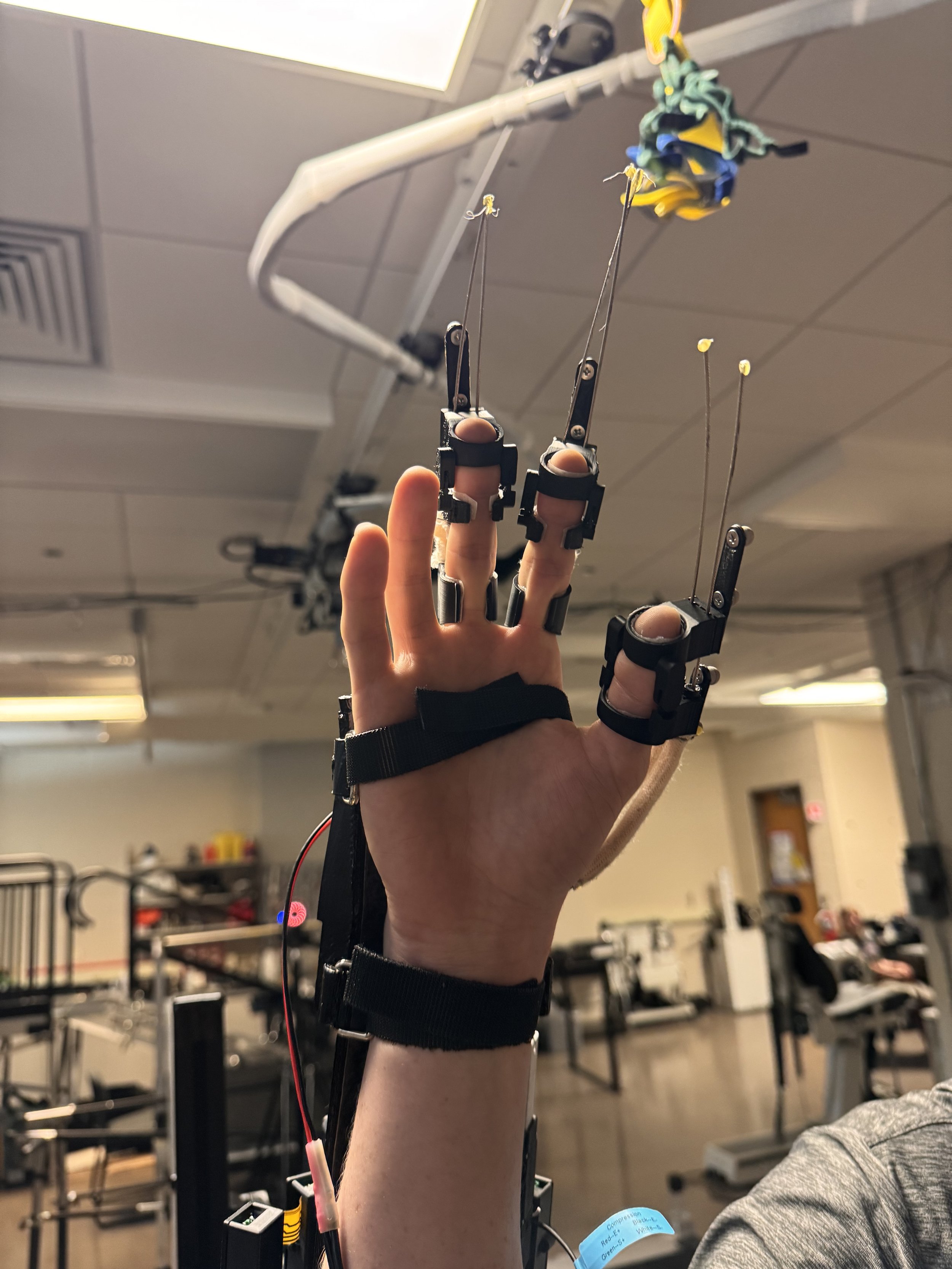
One of the main goals of the hand rehabilitation lab is to help stroke survivors regain and recover hand function. Stroke survivors often struggle with everyday tasks which require fine motor abilities, specifically individual finger motion. The Bidirectionally Actuated Cable Glove (BAC-Glove) is a hand exoskeleton designed to drive independent flexion and extension movements of each finger. Linear actuators affixed to a splint on the dorsal forearm are attached to rigid cables running through guides on the fingers. These allow the fingers to be individually pushed into flexion or pulled into extension. However, this design requires the subject to wear a glove which poses a few problems. The glove may not fit for every subject and more importantly stroke survivors often struggle to wear a glove since their hands are often in a continuously flexed resting posture.
My Research
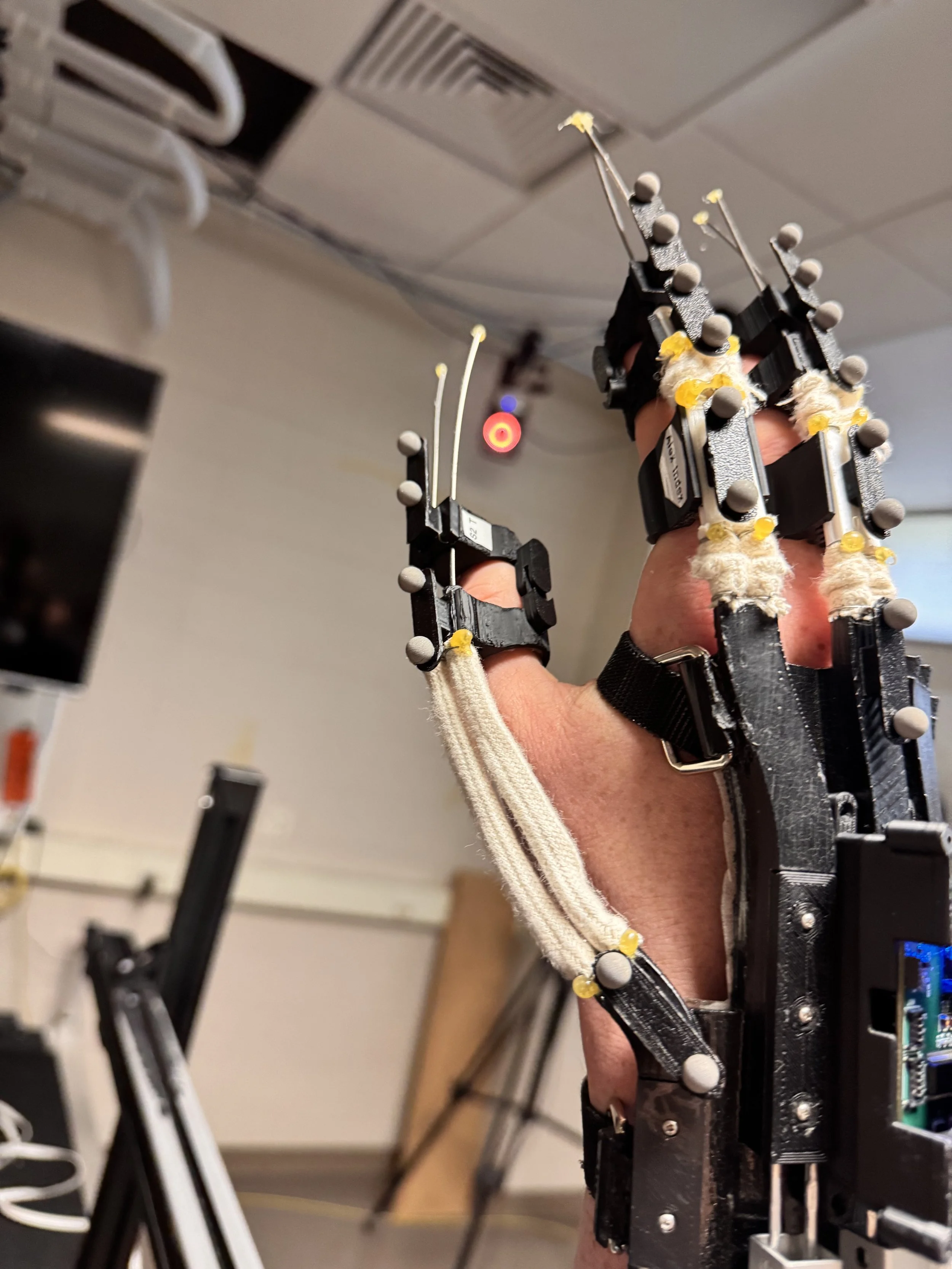
My work has been focused on helping to design the “Clip Glove” which utilizes convenient individual finger attachments for each finger segment rather than a glove. This design allows the subject the same functionality as the BAC-glove with a much easier process to wear the device.
The main challenge has been designing an attachment method which is universal and can be used for any subject with any finger dimensions.
The first iteration of the “Clip Glove” involved a set of clips which are worn by the subject that are dimensioned to that particular subject’s finger geometries. I designed a method in which the subject simply needs to input their finger widths and lengths into a .txt file which then updates a series of SolidWorks files containing carefully dimensioned sketches. A set of custom clips can then be 3D printed for each of the subject’s finger segments. The linear actuators push on rigid cables which feed through guide paths that snap onto the tops of the clips. This solution works, however, it requires a lot of extra work to print and correctly size the clips for each subject which can take a long time.
My solution to this problem was a ring with an adjustable aperture size to accommodate any finger diameter. Similar to how a camera lens opens and closes, my ring mechanism contains six very small pieces which can open and close smoothly to change the geometry of the opening with the simple sliding of a pin. Small elastic dental bands are used to pull on the pin so that the mechanism fits snugly on the finger segment without sliding off when force is applied. The design and assembly of this mechanism were quite challenging considering the small features and level of precision required for fabrication. The upside of this design is that we only need to make these rings once and we can simply reuse them. Since they can be used for any finger sizes, there is no need to make a custom set for each subject that comes in.
After conducting some preliminary motion capture testing using the “Clip Glove”, I have found that my design works well! The rings constrain the finger segments correctly so that when the linear actuator pushes on the cable, the finger bends into flexion, and when the actuator retracts, the finger opens in extension.
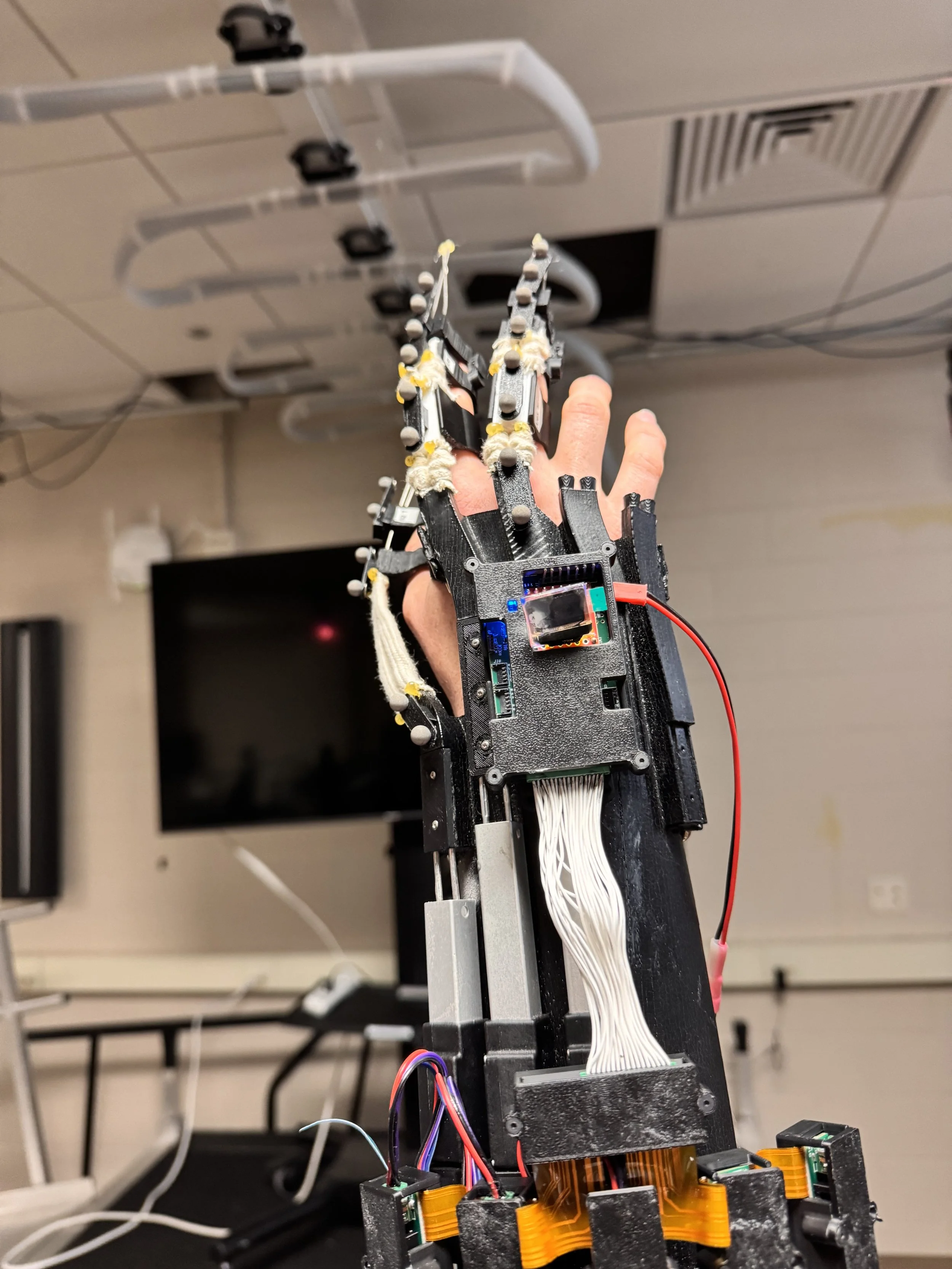
The “Clip Glove” uses custom clips which are sized to a specific subject’s finger geometries. These clips eliminate the need for a stroke survivor to wear a glove, however, it is not practical to fabricate this set of custom clips for every single subject.
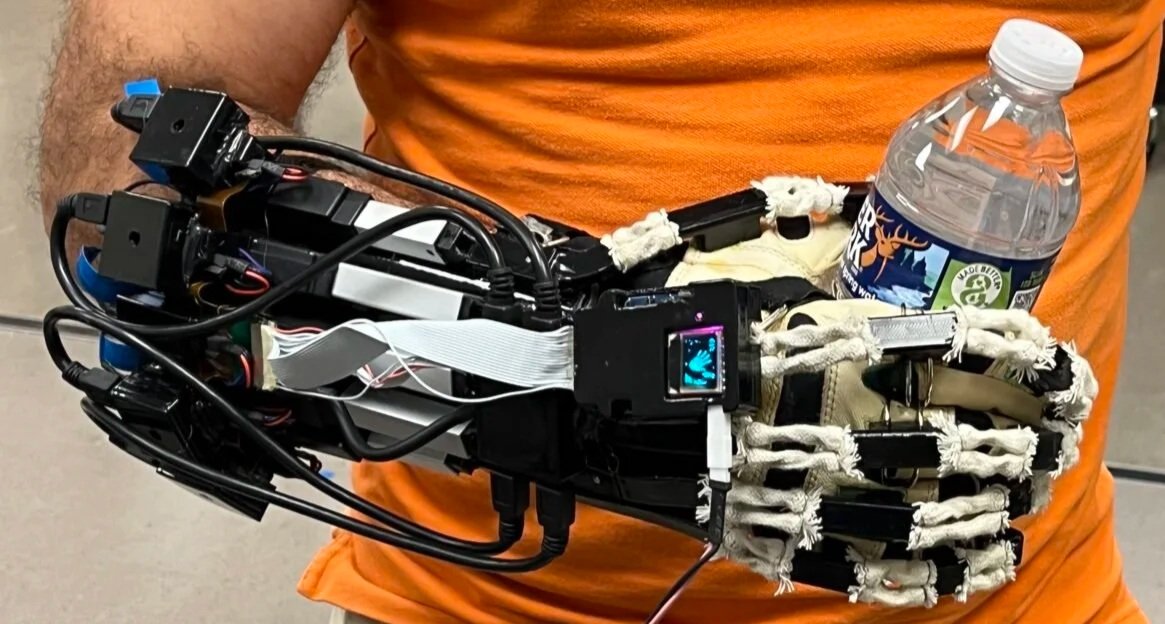
The original BAC-glove drives independent finger flexion and extension for stroke patients. This solution involves a glove which is difficult for stroke survivors to wear and is designed for one specific hand size.
The “Clip Glove”
Adjustable Diameter Rings
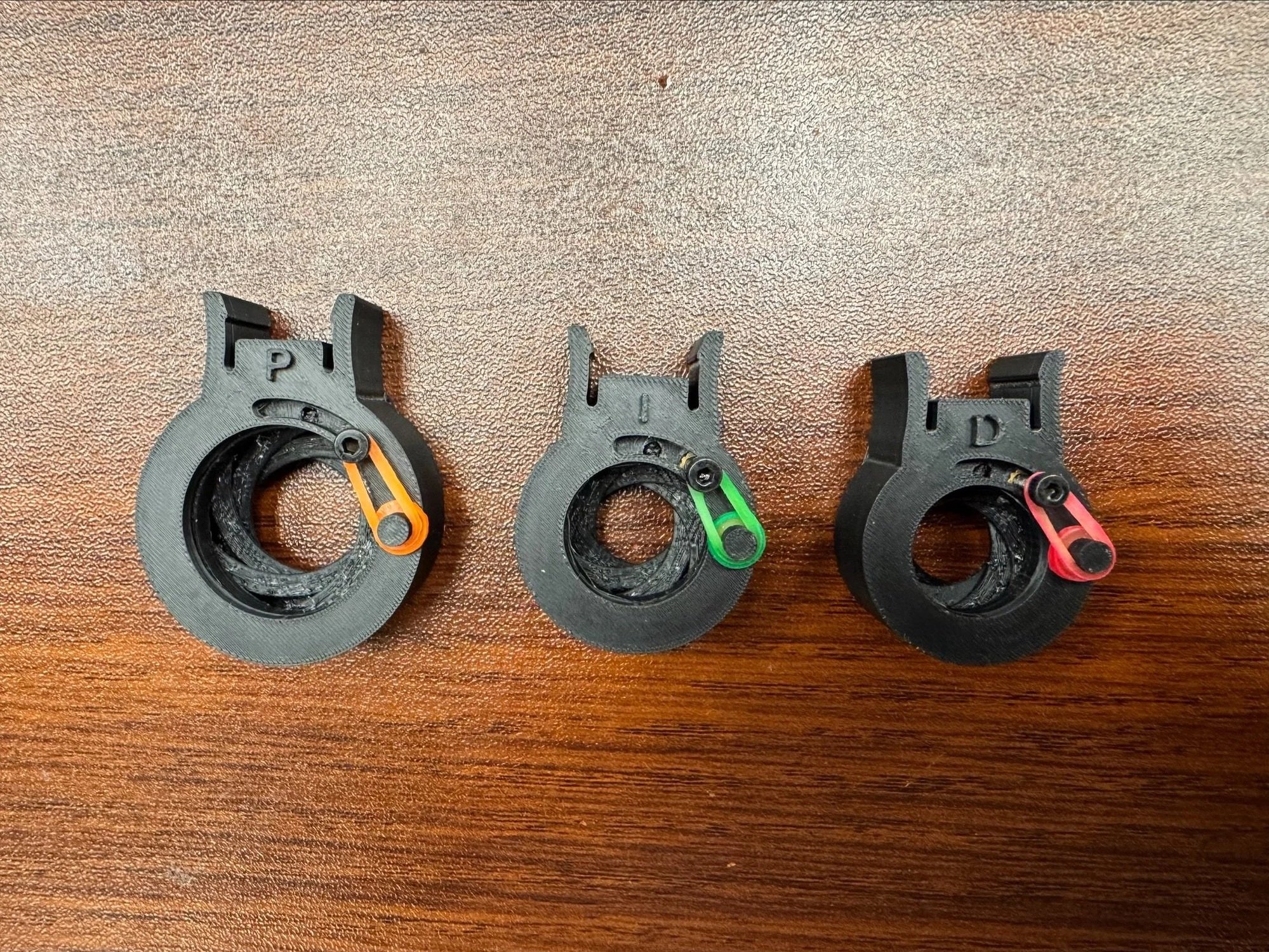
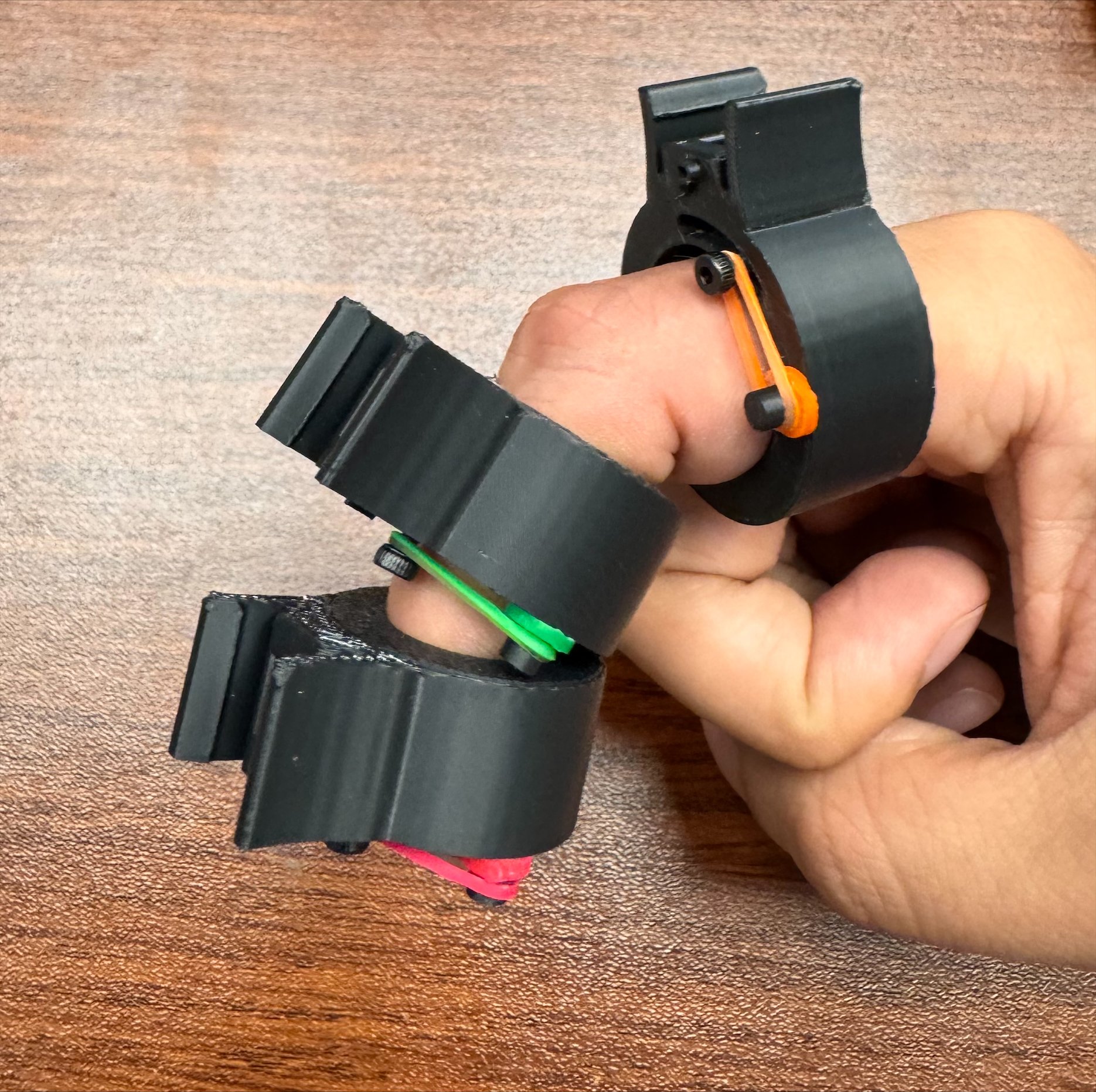
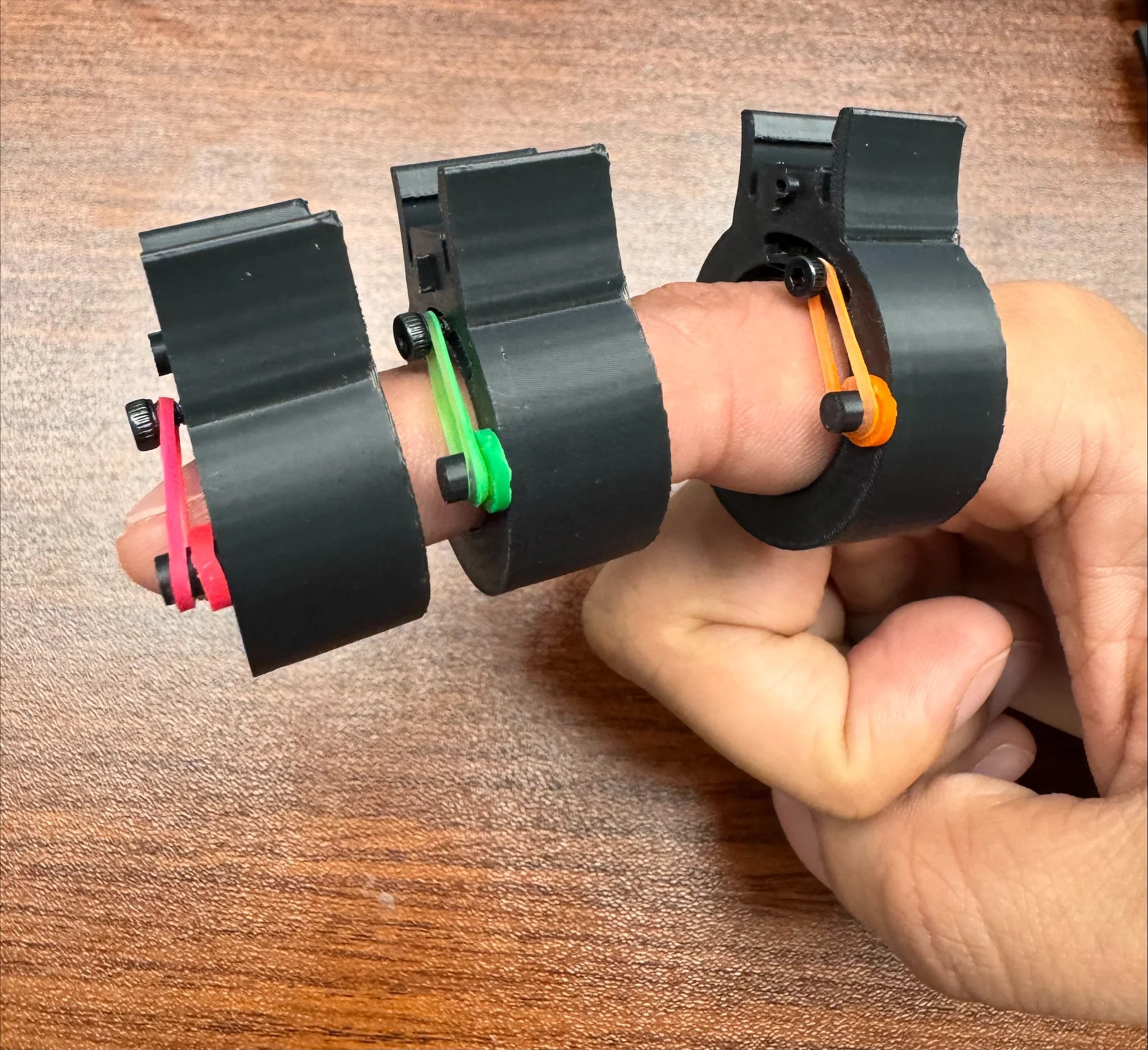
My adjustable ring design for one finger is shown above. This design eliminates the need for a stroke survivor to wear a glove and is universal for any subject. With this design, we will be able to provide more adjustable and universal hand rehabilitation therapy for stroke survivors.
Original BAC-Glove
Robotic EMG Controlled Wrist Actuator
Rehabilitation Robotics Specialty Elective Course
Project Overview
This project provided me with a unique opportunity to tackle a complicated problem with minimal resources. The goal was to create a device capable of extending and flexing the wrist joint using an EMG activated signal. The clinical relevance of this project was again for a bilateral stroke case in which a patient has little to no motor control of one of their hands. I chose to use an EMG signal from the bicep of the opposing arm. The signal from a weak bicep flexion would cause the actuator to pull the wrist back in extension while a larger bicep flexion would result in wrist flexion.
The EMG signal from the electrodes was processed through a MyoWare muscle sensor and then in Arduino IDE to clean up noise and threshold the signal. A lower threshold and upper threshold were set to outline the boundaries for a weak bicep flexion and a strong bicep flexion. The program would then send either the command for wrist extension or wrist flexion to the linear actuator.
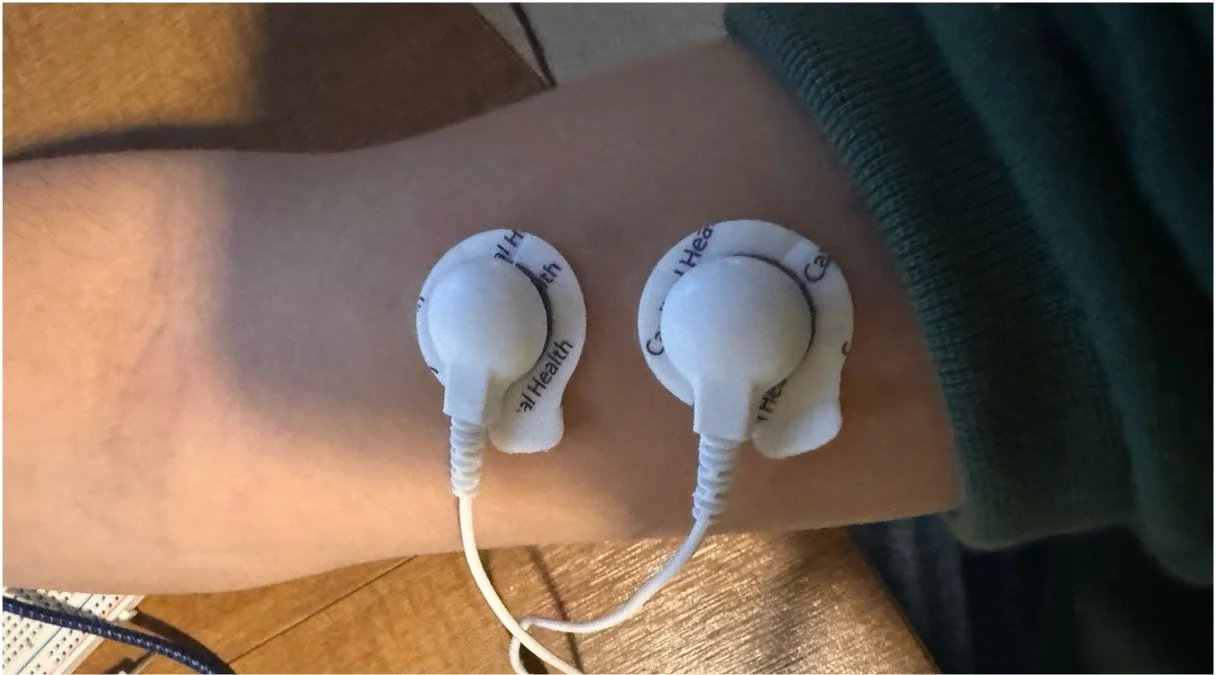
EMG electrodes placed on the bicep (ground electrode not pictured was placed on a bony portion of the wrist.
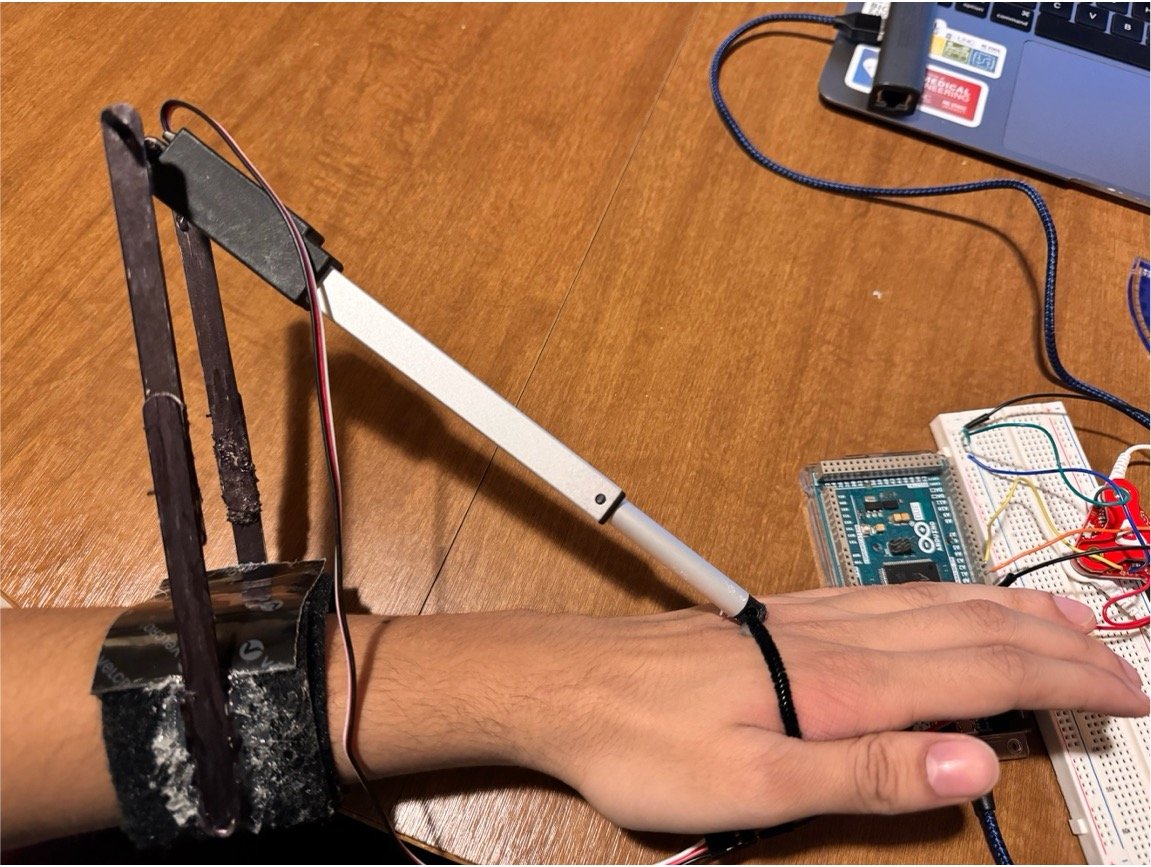
Mount setup for wrist flexion and extension actuator. At the time I did not have access to 3D printing or any other advanced prototyping resources so I challenged myself to use only materials I could find lying around the house for the mount.